Beginner
Serums
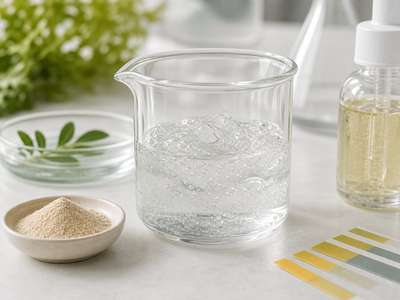
Moisturising facial gel with Siligel
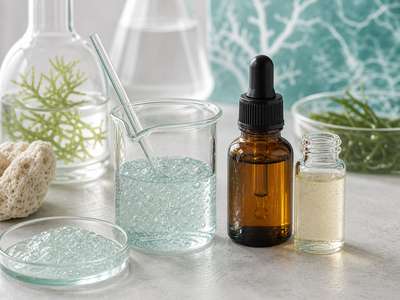
Simple aqueous gel in which Siligel creates the main texture and helps give a fresh, stable feel.
About this recipe. A starting moisturising facial gel for evaluating Siligel as the main gelling agent in a light aqueous formula. The recipe aims for a fresh texture that spreads easily and has good initial stability, without turning it into a cream or loading it with a fatty phase.
Why these ingredients are used.
- Siligel is the main ingredient: it provides structure, viscosity and a more elegant feel than an overly runny aqueous gel.
- Glycerine and propanediol act as humectants and help give a more comfortable feeling of hydration.
- D-Panthenol W75 is incorporated for cosmetic comfort support at a normal formulation usage level.
- Geogard 221 / Cosgard preserves the aqueous phase, provided that the final formula is within its pH range.
- The citric acid solution is used only for adjustment, drop by drop, to the final pH.
Stability, viscosity the following day, preservation, pH, container compatibility and tolerance must be validated before regular use or marketing.
Base formula
| Include | Product | % | Quantity | Price / pack size |
|---|---|---|---|---|
| Humectants and dispersion | ||||
| Distilled or deionised water | 88 % | 88 g | Manual addition | |
| Liquid vegetable glycerine | 4 % | 4 g | €0.09 used (1 x 125 g · purchase €2.90) Approx. leftover 121 g | |
| Propanediol Ecocert | 4 % | 4 g | €0.44 used (1 x 50 ml · purchase €5.50) Approx. leftover 46 ml | |
| Gelling with Siligel | ||||
| Siligel - Natural gelling agent | 1.2 % | 1.2 g | €0.68 used (1 x 10 g · purchase €5.65) Approx. leftover 8.8 g | |
| Active ingredients, preservation and pH | ||||
| D-Panthenol W75 | 2 % | 2 g | €0.36 used (1 x 25 g · purchase €4.45) Approx. leftover 23 g | |
| Geogard 221 / Cosgard | 0.8 % | 0.8 g | €0.16 used (1 x 10 ml · purchase €2.05) Approx. leftover 9.2 ml | |
| 20% citric acid solution | 0 % | 0 c.n. | Manual addition | |
Step by step





Preservation, shelf life and validation
- Indicative formula. It does not replace a safety assessment or stability testing.
- Disinfect the utensils, worktop and container before starting.
- Always measure the final pH. If you cannot measure the pH, do not consider the formula finished.
Questions, improvements and possible corrections
If you have a question about this recipe, notice a possible error or would like to suggest an improvement, please let us know here.