Advanced
Creams
Light natural cream with Plant-Derived Kappa Emulsifier
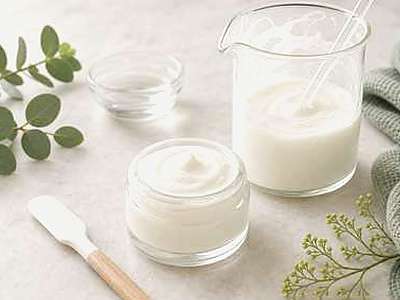
Light-textured O/W emulsion in which Plant-based Kappa Emulsifier works at 5% as the main emulsifier.
About this recipe. A light cream with an external aqueous phase in which Plant-based Kappa Emulsifier is used at 5%, within the documented usage range of 4% to 6%. The aim is to check its ability to create a natural emulsion with body, good spreadability and a comfortable feel on the skin.
Why these ingredients are used.
- Plant-based Kappa Emulsifier is the main emulsifier and the key technical ingredient in the formula.
- Almond oil provides emollience and rounds out the cream without making it excessively heavy.
- Coco Caprylate/Caprate improves slip and lightens the greasy feel.
- Siligel helps stabilise the aqueous phase and improves the final texture.
- Geogard 221 / Cosgard preserves the aqueous formula within its pH range.
This is a starting formula. Before considering it satisfactory, check pH, viscosity after 24-48 hours, separation, smell, colour, stability and tolerance.
Base formula
| Include | Product | % | Quantity | Price / pack size |
|---|---|---|---|---|
| Aqueous phase | ||||
| Distilled or deionised water | 69.7 % | 69.7 g | Manual addition | |
| Liquid vegetable glycerine | 3 % | 3 g | €0.07 used (1 x 125 g · purchase €2.90) Approx. leftover 122 g | |
| Siligel - Natural gelling agent | 0.3 % | 0.3 g | €0.17 used (1 x 10 g · purchase €5.65) Approx. leftover 9.7 g | |
| Hot oil phase | ||||
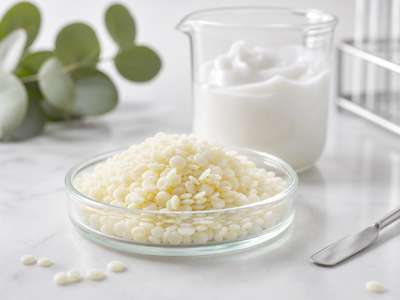
| Plant-based Kappa Emulsifier | 5 % | 5 g | Pack sizes are available, but they are currently out of stock. | |
| Sweet Almond Oil | 15 % | 15 g | €0.35 used (1 x 125 ml · purchase €2.95) Approx. leftover 110 ml | |
| Coco Caprilate / Caprate - RSPO MB | 6 % | 6 g | €0.43 used (1 x 50 ml · purchase €3.60) Approx. leftover 44 ml | |
| Natural vitamin E | 0.2 % | 0.2 g | €0.15 used (1 x 10 ml · purchase €7.45) Approx. leftover 9.8 ml | |
| Cooling and adjustment | ||||
| Geogard 221 / Cosgard | 0.8 % | 0.8 g | €0.16 used (1 x 10 ml · purchase €2.05) Approx. leftover 9.2 ml | |
| 20% citric acid solution | 0 % | 0 c.n. | Manual addition | |
Step by step





Preservation, shelf life and validation
- Indicative formula for external cosmetic use. It must be tested and validated before regular use or sale.
- Work with clean, dry, disinfected utensils. In formulas containing water, always check pH and preservation.
- Do not apply to irritated skin, wounds or mucous membranes. Carry out a tolerance test if the skin is sensitive.
Questions, improvements and possible corrections
If you have a question about this recipe, notice a possible error or would like to suggest an improvement, please let us know here.