Nourishing body cream with Xyliance
Advanced
Creams

Nourishing body cream with Xyliance

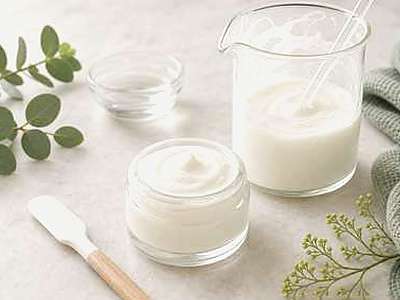
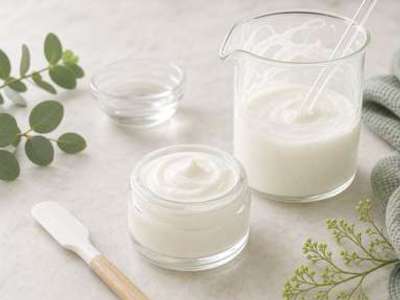
O/W body cream in which Xyliance supports a more nourishing oil phase.

Save to favourites
The formula is designed around the emulsifier as the functional ingredient that supports the recipe. Although its percentage is lower than that of the water or oils, it is the component that allows the cream to form and is therefore considered the key technical ingredient. Xyliance is retained as the main emulsifier to evaluate body, stability and a nourishing feel in a simple body cream. This is an indicative suggestion: before making it in quantity, stability, viscosity, pH, container compatibility, preservation and skin tolerance must be tested.

Base formula

Include Product % Quantity Price / pack size
Oil phase
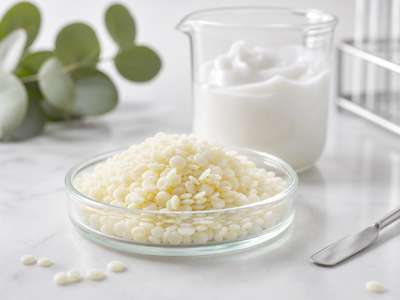
Emulsifying Wax No. 2 - Xyliance
5 % 5 g €0.58 used (1 x 25 g · purchase €2.90) Approx. leftover 20 g
Sweet Almond Oil
12 % 12 g €0.28 used (1 x 125 ml · purchase €2.95) Approx. leftover 113 ml
Coco Caprilate / Caprate
8 % 8 g €0.58 used (1 x 50 ml · purchase €3.60) Approx. leftover 42 ml
Aqueous phase
Distilled water
70 % 70 g Manual addition
Vegetable glycerine
4 % 4 g €0.09 used (1 x 125 g · purchase €2.90) Approx. leftover 121 g
Xanthan Gum
0.2 % 0.2 g €0.02 used (1 x 25 g · purchase €2.45) Approx. leftover 24.8 g
Cooling phase
Geogard 221 Preservative
0.8 % 0.8 g €0.16 used (1 x 10 ml · purchase €2.05) Approx. leftover 9.2 ml

Step by step

Disinfect and prepare the equipment 1 Room temperature

Disinfect and prepare the equipment

Before weighing, clean the worktop and disinfect the beakers, stirring rods, spatulas, thermometer and final container. In a water-containing cream, hygiene is not a minor detail: it is one of the most important parts of the formula.

Also prepare pH strips or a pH meter, because the pH will need to be checked before considering the recipe complete.

Prepare the aqueous phase 2 Room temperature

Prepare the aqueous phase

Weigh the water and glycerine into a heat-resistant beaker. Sprinkle in the xanthan gum gradually while mixing to avoid lumps.

Leave it to hydrate for a few minutes. If you see small specks of unhydrated gum, continue mixing patiently before heating.

Prepare the oil phase 3 70-75 ºC

Prepare the oil phase

In another beaker, weigh the oils and Emulsifying Wax No. 2 - Xyliance. This will be the phase that gives the cream body and structure.

Heat the aqueous phase and oil phase separately to around 70-75 ºC. The oil phase should be fully melted and uniform before combining.

Emulsify 4 70-75 ºC

Emulsify

Pour the oil phase into the hot aqueous phase and mix with a low-power blender or stirrer for one or two minutes. Then alternate short pulses with manual stirring.

It may seem runny at first; this is normal. The viscosity usually increases as the emulsion cools.

Cool with gentle mixing 5 <35 ºC

Cool with gentle mixing

Continue stirring gently as the cream cools. There is no need to whisk continuously, but it is helpful to stir occasionally so that it cools evenly.

Once it is below 35 ºC, you can move on to the final phase.

Add the preservative and check the pH 6 <35 ºC

Add the preservative and check the pH

Add the preservative and mix until it is fully distributed. Do not add it while hot: wait until the cream is below 35 ºC.

Then measure the pH. The indicative range for this recipe is 5.0-5.8. If it is outside the range, adjust gradually and measure again until stable.

Package and validate Final Room temperature

Package and validate

Transfer the cream to a clean, dry jar or airless container. Label it with the name, date and test batch.

Do not assess the formula only when it is freshly made. Check it after 24 hours and over several days: separation, smell, colour, texture, loss of viscosity, feel on the skin and compatibility with the container.

Preservation, shelf life and validation

  • Indicative formula for external cosmetic use. Disinfect utensils and containers, work hygienically and avoid touching the finished cream with your hands.
  • As it contains water, it needs a preservative and microbiological validation if it is to be sold or stored for a prolonged period. Do not use if its smell, colour or texture changes, or if unusual separation appears.

Questions, improvements and possible corrections

If you have a question about this recipe, notice a possible error or would like to suggest an improvement, please let us know here.
We review messages before publishing them. Please do not include personal data or medical questions; if the answer could help others, we will publish it as an answered question.