Washing-up liquid with Sodium Olefin Sulfonate
Beginner
Household cleaning

Washing-up liquid with Sodium Olefin Sulfonate

Formula for cleaning by hand in which Sodium Olefin Sulfonate is the main surfactant.

Save to favourites
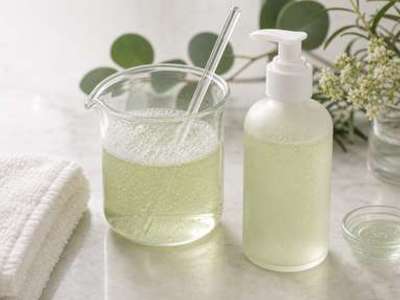
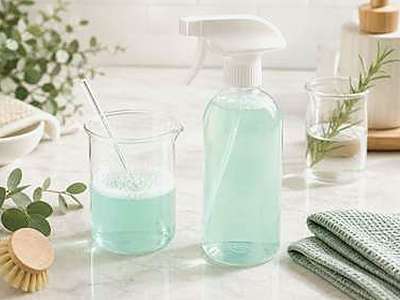
An indicative hand dishwashing liquid for evaluating the foaming and cleaning power of Sodium Olefin Sulfonate in a simple household formula. The main ingredient is Sodium Olefin Sulfonate. The recipe is designed around it as the core of the cleansing system, rather than a token addition. The other ingredients help adjust texture, foam, comfort in use and preservation. Why it is designed this way: - Sodium Olefin Sulfonate is used at 25%, well above the supporting glucoside. - Coco Glucoside rounds out the foam and helps keep the formula from relying on a single surfactant. - Viscosity is kept moderate for easy dispensing. - It is not intended as a disinfectant and must not be mixed with bleach, ammonia or other cleaners. Easy level: requires precise weighing, slow mixing to avoid filling the formula with air, and a final pH check. This is an indicative suggestion; before continued use or marketing, stability, preservation, pH, viscosity, container compatibility, foam and tolerance must be validated.

Base formula

Include Product % Quantity Price / pack size
Aqueous phase
Distilled water
65.8 % 65.8 g Manual addition
Clear Xanthan Gum
0.4 % 0.4 g €0.05 used (1 x 30 g · purchase €3.50) Approx. leftover 29.6 g
Surfactant phase
Sodium C14-16 Olefin Sulfonate
25 % 25 g €0.42 used (1 x 125 ml · purchase €2.10) Approx. leftover 100 ml
Coco Glucoside
8 % 8 g €0.21 used (1 x 125 ml · purchase €3.30) Approx. leftover 117 ml
Final phase and pH
Geogard 221 / Cosgard Preservative
0.8 % 0.8 g €0.16 used (1 x 10 ml · purchase €2.05) Approx. leftover 9.2 ml

Step by step

Prepare the workspace and equipment 1 Room temperature

Prepare the workspace and equipment

Before weighing anything, clean the worktop and disinfect the beakers, spatulas, stirring rods, thermometer, pH meter or pH strips, and final container.

Keep the formula in front of you and check that every ingredient is identified. This step may seem basic, but it prevents almost all simple mistakes: mixing up a surfactant, forgetting the preservative or having to look for something while the mixture is uncovered.

Prepare the aqueous phase 2 Room temperature

Prepare the aqueous phase

Weigh the water into a clean beaker. In another small container, mix the glycerine with the xanthan gum, if included in the recipe, until it is thoroughly wetted.

Gradually add this premix to the water and stir until there are no visible dry lumps. Leave it to rest for a few minutes so that the texture starts to develop.

Add the main surfactant 3 Room temperature

Add the main surfactant

First incorporate the recipe's main surfactant. Do this slowly and gently, without a blender, to avoid filling the beaker with foam.

Once incorporated, check that the mixture is uniform before adding the next ingredient. With surfactants, adding them one at a time usually leads to far fewer surprises.

Add the supporting surfactants 4 Room temperature

Add the supporting surfactants

Now add the secondary surfactants in the formula, one at a time. Mix after each addition until you can no longer see separate areas.

If too much foam forms, stop. There is no harm in waiting five minutes: a formula with less air is easier to measure and package.

Add the final phase 5 <35 ºC

Add the final phase

When the mixture is uniform and below 35 ºC, add the preservative and sensitive ingredients, such as panthenol if it appears in the formula.

Mix patiently. The aim is to distribute the ingredients evenly, not to whisk them.

Measure and adjust the pH 6 Room temperature

Measure and adjust the pH

Measure the pH at the end, not at the beginning. The indicative target for this recipe is 5.5-6.5.

If you need to lower the pH, use a dilute solution of lactic acid or citric acid and add it very gradually. Mix, wait a few minutes and measure again before adding more. If you need to raise it, likewise make dilute, controlled adjustments.

Package and validate Final Room temperature

Package and validate

Transfer to a clean container and label it with the name, date and intended use. If it is for dishes or surfaces, rinse thoroughly after use.

Test on a small area before applying to delicate materials. Do not mix with other cleaners.

Preservation, shelf life and validation

  • Indicative formula for cleaning surfaces or dishes, not for cosmetic use. Do not mix with bleach, ammonia, strong acids or other cleaners.
  • Wear gloves if you have sensitive skin. Thoroughly rinse surfaces that come into contact with food and test on a small area first.

Questions, improvements and possible corrections

If you have a question about this recipe, notice a possible error or would like to suggest an improvement, please let us know here.
We review messages before publishing them. Please do not include personal data or medical questions; if the answer could help others, we will publish it as an answered question.