Advanced
Solid shampoo
Basic solid shampoo with microfiltered SCI
Indicative solid shampoo formula with microfiltered SCI as the main surfactant.
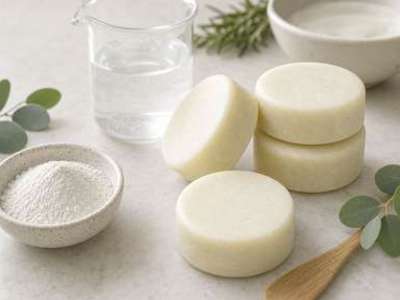
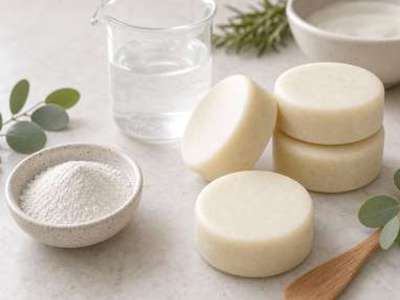
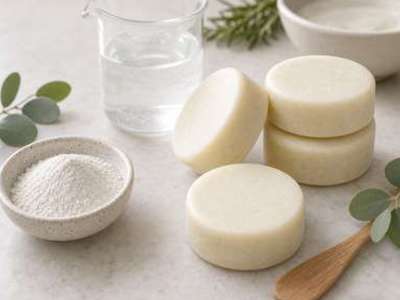
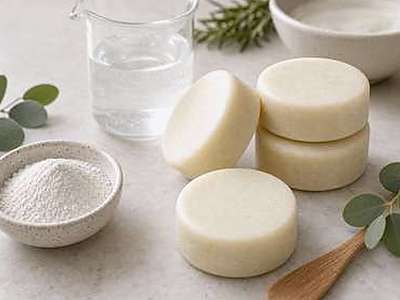
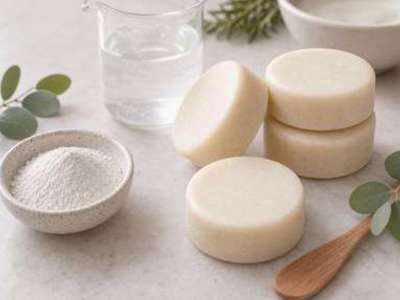
A basic solid shampoo in which microfiltered SCI is the main surfactant and the other ingredients help with compaction, conditioning and improved rinsing.
The main ingredient is microfiltered SCI. The recipe is calculated to give it a real role in the formula, rather than including it as a decorative addition.
Why it is designed this way:
- Microfiltered SCI remains at 55%, clearly making it the main ingredient.
- Disodium Cocoyl Glutamate is used for mild support, not as the main base.
- Panthenol and protein help with hair feel but do not define the recipe.
- This is a useful basic formula for practising texture, compaction and pH in syndet bars.
Intermediate level: a mask must be worn when handling surfactant powders, the mixture must be well compacted, the bar must be allowed to dry, and the pH must be checked in an aqueous dispersion before considering it valid. This is an indicative suggestion that must be tested and validated.
Base formula
| Include | Product | % | Quantity | Price / pack size |
|---|---|---|---|---|
| Powdered surfactants | ||||
| Microfiltered SCI | 55 % | 55 g | Pack sizes are available, but they are currently out of stock. | |
| Disodium Cocoyl Glutamate powder | 12 % | 12 g | €1.36 used (1 x 50 g · purchase €5.65) Approx. leftover 38 g | |
| Melted phase and actives | ||||
| Cetyl Alcohol | 6 % | 6 g | €0.27 used (1 x 50 g · purchase €2.25) Approx. leftover 44 g | |
| Sweet Almond Oil | 8 % | 8 g | €0.19 used (1 x 125 ml · purchase €2.95) Approx. leftover 117 ml | |
| Liquid vegetable glycerine | 5 % | 5 g | €0.12 used (1 x 125 g · purchase €2.90) Approx. leftover 120 g | |
| D-Panthenol W75 | 2 % | 2 g | €0.36 used (1 x 25 g · purchase €4.45) Approx. leftover 23 g | |
| Hydrolysed Wheat Protein | 3 % | 3 g | €0.78 used (1 x 10 ml · purchase €2.60) Approx. leftover 7 ml | |
| Distilled or deionised water | 8.2 % | 8.2 g | Manual addition | |
| Geogard 221 / Cosgard | 0.8 % | 0.8 g | €0.16 used (1 x 10 ml · purchase €2.05) Approx. leftover 9.2 ml | |
Step by step







Preservation, shelf life and validation
- Handle powdered surfactants with a mask, goggles and gloves. Avoid raising dust while weighing and mixing.
- Measure the pH in an aqueous dispersion before validating the bar. Do not seal it in airtight packaging until the product is sufficiently hard and dry.
Questions, improvements and possible corrections
If you have a question about this recipe, notice a possible error or would like to suggest an improvement, please let us know here.