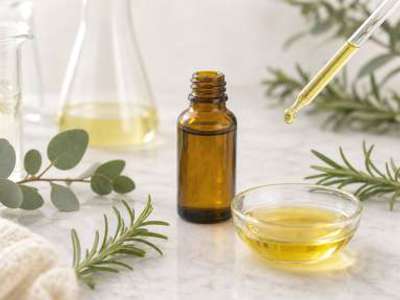
Body massage oil with Silky-Feel Lipid Complex
Beginner
Body oil

Body massage oil with Silky-Feel Lipid Complex

Anhydrous formula for massage and body care, in which the lipid complex determines the final skin feel.

Save to favourites
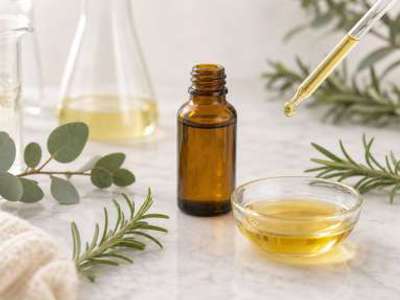
Simple body oil, with no water or preservative, designed to assess silicone-like silkiness without silicones. It is a starting proposal for checking skin feel, absorption and packaging compatibility before scaling up. The formula uses the lipid complex at 60% so that it is the ingredient that defines the finish, spreadability and final feel. The rest of the oil phase is reserved for adjusting body, glide and absorption rate without displacing the role of the main product.

Base formula

Include Product % Quantity Price / pack size
Single oil phase
Silky-touch lipid complex
60 % 60 g €10.87 used (1 x 60 ml · purchase €10.87) Approx. leftover 0 ml · fully used
Coco Caprilate / Caprate
39.5 % 39.5 g €2.84 used (1 x 50 ml · purchase €3.60) Approx. leftover 10.5 ml
100% Natural Vitamin E TC90
0.5 % 0.5 g €0.37 used (1 x 10 ml · purchase €7.45) Approx. leftover 9.5 ml

Step by step

Prepare the workspace 1 Room temperature

Prepare the workspace

Before starting, clean and disinfect the worktop, spatula, mixing beaker and final container. Although this formula contains no water, it is important to work methodically to avoid contaminating the oils or getting the neck of the bottle dirty.

Have all the ingredients weighed out or ready to hand before opening them. This will avoid leaving containers open longer than necessary.

Weigh the lipid complex 2 Room temperature

Weigh the lipid complex

First weigh the Silky-Feel Lipid Complex directly into the mixing beaker. It makes up 60% of this formula, so it will be the ingredient that determines the skin feel, spreadability and final sensation.

If the product is cold and feels more viscous, let it reach room temperature before mixing. There is no need to heat it unless the particular ingredient has thickened in the cold.

Add the adjusting emollients 3 Room temperature

Add the adjusting emollients

Now add the other emollients in the formula gradually. Their role is to adjust glide, absorption and greasiness, not to replace the lipid complex.

Mix slowly between additions. In an anhydrous formula, we want a clean, uniform mixture without unnecessary foam or bubbles.

Homogenise without incorporating air 4 Room temperature

Homogenise without incorporating air

Stir for a few minutes with a clean stirring rod or spatula, using gentle movements from the bottom towards the sides of the beaker. If you see streaks or areas with different clarity, continue mixing until the appearance is completely uniform.

Avoid vigorous whisking. We are not making an emulsion: we simply want to distribute the oils evenly.

Package and leave to rest 5 Room temperature

Package and leave to rest

Transfer to a clean, dry bottle or container, preferably opaque or amber. If any product remains on the sides of the beaker, scrape it off with a spatula so that the final percentages in the formula are not altered.

Leave the closed container to rest for 24-48 hours. Then check the smell, colour, clarity, separation and feel on a small area of skin.

Check use and validation Final Room temperature

Check use and validation

Try a small amount first. In oil-based formulas, one or two drops may be enough for the face; for the body, the amount will depend on the area and how much massage you want.

Do not measure the pH of this recipe because it contains no aqueous phase. If you later turn it into a cream, body milk or water-containing product, you will need to reformulate and validate the pH, preservation and stability from scratch.

Preservation, shelf life and validation

  • Indicative formula for external cosmetic use. It must be tested and validated before sale or regular use: stability, smell, colour, packaging compatibility, skin tolerance and behaviour at different temperatures.
  • As an anhydrous formula, it does not need a preservative because there is no aqueous phase, but it must be protected from water, dirt and direct handling. Do not apply to irritated skin, wounds or mucous membranes.

Questions, improvements and possible corrections

If you have a question about this recipe, notice a possible error or would like to suggest an improvement, please let us know here.
We review messages before publishing them. Please do not include personal data or medical questions; if the answer could help others, we will publish it as an answered question.