Beginner
Body oil
Dispersible bath oil with Soya Lysolecithin
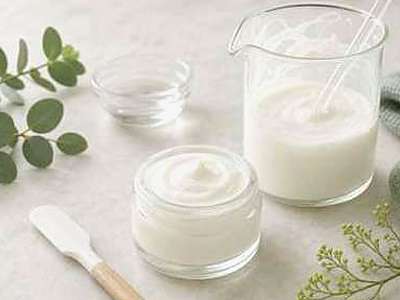
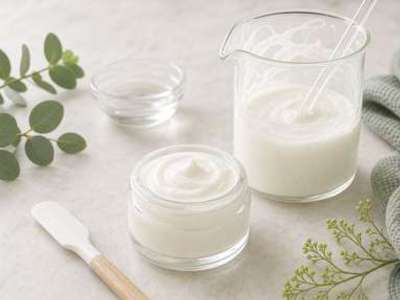
Anhydrous oil-to-milk oil with Lysolecithin as the main dispersant.
An anhydrous, dispersible bath oil for evaluating Soy Lysolecithin as an ingredient that helps the oil phase distribute better on contact with water.
The main ingredient is Soy Lysolecithin: although it is not the largest component by weight, it is what enables the emulsion, texture or dispersion to form. This is why the recipe makes sense as a formula specific to this product.
Why it is designed this way:
- Lysolecithin is used at 15%, a clearly central usage level in an oil-to-milk formula.
- The blend of vegetable oil and light ester balances nourishment and rinsing.
- It contains no water, so it is not preserved like a classic emulsion, but water must be kept out of the container.
- The key test is not pH, but dispersion in water, smell, clarity and the feel after rinsing.
Easy level: requires accurate weighing, temperature control when making a hot-process emulsion, and validation of the finished formula. Before scaling up or marketing, check stability, pH where applicable, viscosity, smell, colour, preservation and container compatibility.
Base formula
| Include | Product | % | Quantity | Price / pack size |
|---|---|---|---|---|
| Anhydrous oil phase | ||||
| Liquid Soy Lysolecithin | 15 % | 15 g | €1.17 used (1 x 50 ml · purchase €3.90) Approx. leftover 35 ml | |
| Sweet Almond Oil | 55 % | 55 g | €1.30 used (1 x 125 ml · purchase €2.95) Approx. leftover 70 ml | |
| Coco Caprylate / Caprate | 25 % | 25 g | €1.80 used (1 x 50 ml · purchase €3.60) Approx. leftover 25 ml | |
| Organic Virgin Jojoba Oil | 5 % | 5 g | €0.66 used (1 x 30 ml · purchase €3.95) Approx. leftover 25 ml | |
Step by step





Preservation, shelf life and validation
- Indicative anhydrous formula. Work with completely dry utensils and containers; if water enters the container, the risk of deterioration increases.
- May make the bath or shower slippery. Use a small amount and rinse the surface afterwards.
Questions, improvements and possible corrections
If you have a question about this recipe, notice a possible error or would like to suggest an improvement, please let us know here.