Cream conditioner with Plant-Derived Conditioning Emulsifier
Advanced
Creams

Cream conditioner with Plant-Derived Conditioning Emulsifier

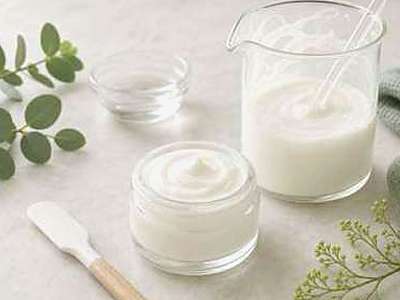
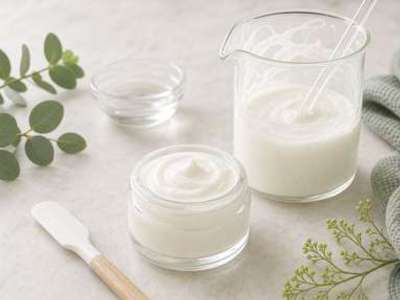
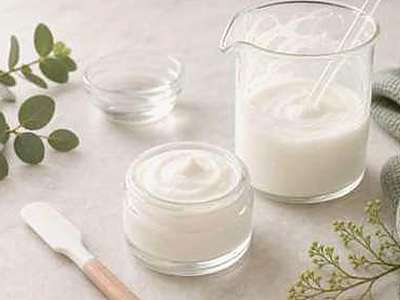
Rinse-off hair formula in which the conditioning emulsifier is the main technical ingredient.

Save to favourites
This formula uses the emulsifier as the key technical ingredient: although water is the largest component, the emulsifier is the ingredient that allows the cream to exist and retain its structure. The Plant-based Conditioning Emulsifier is used at 7%, within its recommended range, so that the formula is truly a conditioner based on this product, rather than a generic cream with a token addition. This is an indicative suggestion that must be validated before scaling up: stability, viscosity, pH, preservation, container compatibility and tolerance in use.

Base formula

Include Product % Quantity Price / pack size
Oil phase / emulsifier
Plant-based Conditioning Emulsifier
7 % 7 g €0.49 used (1 x 50 g · purchase €3.50) Approx. leftover 43 g
Coco Caprilate / Caprate
4 % 4 g €0.29 used (1 x 50 ml · purchase €3.60) Approx. leftover 46 ml
Organic Virgin Jojoba Oil
3.2 % 3.2 g €0.42 used (1 x 30 ml · purchase €3.95) Approx. leftover 26.8 ml
Aqueous phase
Distilled water
82 % 82 g Manual addition
Vegetable glycerine
3 % 3 g €0.07 used (1 x 125 g · purchase €2.90) Approx. leftover 122 g
Cooling phase
Geogard 221 Preservative
0.8 % 0.8 g €0.16 used (1 x 10 ml · purchase €2.05) Approx. leftover 9.2 ml

Step by step

Prepare and disinfect 1 Room temperature

Prepare and disinfect

Clean the worktop and disinfect the beakers, spatulas, blender, thermometer and final container. In a water-containing formula, hygiene is as important as accurate weighing.

Also prepare pH strips or a pH meter, because this recipe is not considered complete until the final pH has been checked.

Weigh the phases 2 Room temperature

Weigh the phases

Weigh the aqueous phase into one beaker and the oil phase with the emulsifier into another. If using a one-pot method, you can weigh everything that will be heated into the same beaker, leaving the preservative until the end.

Check the total before heating. It is much easier to correct a weight now than when the cream has already been emulsified.

Heat until melted 3 55-70 ºC

Heat until melted

Heat to 55-70 ºC, or until the emulsifier has melted completely and the phase looks uniform. Do not raise the temperature unnecessarily.

If any flakes or unmelted spots remain, wait and mix gently before emulsifying.

Emulsify patiently 4 55-70 ºC

Emulsify patiently

Combine the hot phases and mix with a low-power blender for one or two minutes. Then alternate short rests with manual mixing so that the emulsion gradually develops body.

Do not worry if it seems runny at first. Many emulsions gain viscosity as they cool.

Cool and add the preservative 5 <35 ºC

Cool and add the preservative

Continue mixing occasionally as the temperature falls. Once it is below 35 ºC, add the preservative and mix thoroughly.

Do not add the preservative while hot unless its technical data sheet permits this. Here we incorporate it in the final phase as a cautious approach.

Measure and adjust the pH 6 <35 ºC

Measure and adjust the pH

Measure the pH once the formula is cool. The indicative target is 5.0-5.5.

If adjustment is needed, make small changes, mix, wait a few minutes and measure again. A sudden adjustment can spoil the texture or take the formula outside its comfortable range.

Package and validate Final Room temperature

Package and validate

Transfer to a clean, dry container, label it with the date and leave to rest for 24 hours before assessing the final texture.

Over several days, check separation, smell, colour, viscosity and feel during use. If it is to be sold, this home test does not replace full cosmetic validation.

Preservation, shelf life and validation

  • Indicative formula for external cosmetic use. Disinfect utensils and containers, work hygienically and avoid touching the finished formula with your hands.
  • As it contains water, it needs a preservative and microbiological validation if it is to be sold or stored for a prolonged period. Do not use if its smell, colour or texture changes, or if unusual separation appears.

Questions, improvements and possible corrections

If you have a question about this recipe, notice a possible error or would like to suggest an improvement, please let us know here.
We review messages before publishing them. Please do not include personal data or medical questions; if the answer could help others, we will publish it as an answered question.